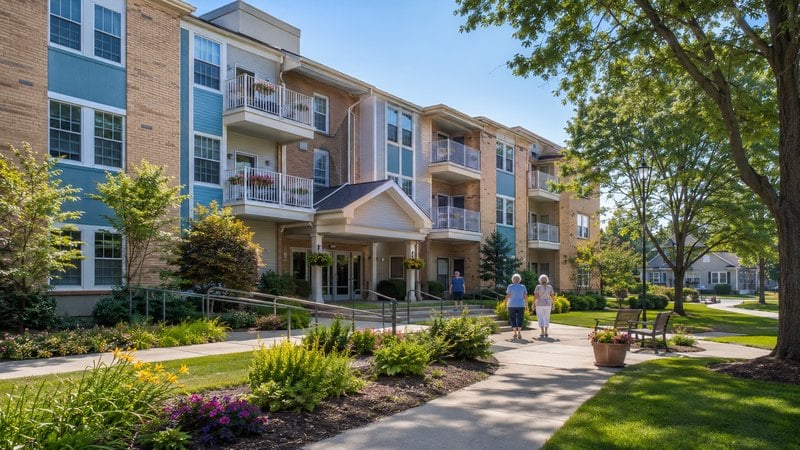
For many older Americans, retirement does not necessarily bring financial security. Instead, it can mean trying to cover rent, food, utilities, and medical care with one limited monthly payment.

I saw this problem firsthand last year while helping an elderly neighbor search for a less expensive place to live. After her landlord retired, her rent went up by 20%. What initially seemed like a simple apartment search turned into months of phone calls, applications, eligibility checks, and conversations with housing counselors.
The experience made one thing clear: senior apartments advertised at very low prices do exist, but they are not ordinary rentals. In most cases, the low rent is made possible through income-based housing, federal assistance, nonprofit programs, or specialized community housing.
Why Housing Has Become Unaffordable for Many Seniors
A home may be considered affordable when housing expenses remain below 30% of a household's monthly income. Unfortunately, a large percentage of older adults now exceed that threshold.
Approximately 25% of senior homeowners and 54% of renters spend more than 30% of their monthly income on housing.
The 2025 Housing for Older Adults Report from the Joint Center for Housing Studies at Harvard University indicates that this problem has continued to worsen over the past decade. Seniors who live alone and depend exclusively on Social Security are among those facing the greatest financial pressure.
High rent does more than limit a person's spending money. It can force older adults to sacrifice necessities. Research published in the 2025 Journal of Gerontology found that approximately 18% of seniors living in unsubsidized housing had skipped meals or medications to keep up with housing costs.
For these seniors, affordable housing is not simply a way to save money. It can determine whether they can continue paying for food, prescriptions, and other essential expenses.
What a "$300 Senior Apartment" Usually Means
An apartment priced at $300 is rarely a conventional market-rate rental. It is more likely to be part of a program that calculates rent according to the resident's income.
Many income-based senior housing programs require tenants to pay approximately 30% of their adjusted monthly income.
The basic calculation is:
Monthly Rent Payment = (Monthly Adjusted Income) x 0.30
If a senior's adjusted monthly income is $1,000, the resulting rent would generally be $300.
The word "adjusted" is important. Housing programs may subtract eligible medical or disability-related expenses from a person's income before calculating the rent. Consequently, two seniors receiving the same total income may not necessarily pay the same amount.
Federal Assistance That Can Lower Senior Rent
Two major federal housing programs can help qualifying older adults reduce their monthly rental expenses. They work differently, so seniors may benefit from applying to both.
Section 202 Supportive Housing for the Elderly
Section 202 was developed specifically to provide housing for low-income older adults.
Although no new properties have received funding since 2012, previously established Section 202 communities remain in operation.
Applicants generally need to meet the following requirement:
Eligibility: Adults 62+ with incomes at or below 50% of area median income.
At participating properties, rent is capped at 30% of adjusted income. Some communities also provide supportive services that help residents remain independent.
According to 2025 data, approximately 350,000 units are available nationwide. However, demand is high, and average wait times range from 18-36 months.
Applicants should not interpret a long waiting list as a reason to avoid applying. Joining several lists early may improve the possibility of eventually receiving an apartment.
Housing Choice Voucher Program (Section 8)
The Housing Choice Voucher Program, commonly called Section 8, helps eligible households rent privately owned housing.
Instead of requiring a senior to move into one particular government-supported building, a voucher can generally be used with a participating private landlord.
The amount of assistance depends on the local rental market and the applicant's circumstances. In 2025, voucher amounts vary by region, with a national average subsidy of $780 monthly for seniors.
Local agencies often establish priority categories that include elderly and disabled applicants. However, receiving a voucher does not always mean that a senior can immediately rent an apartment.
Voucher utilization rates average 75% nationally due to landlord participation issues. Some landlords do not accept vouchers, while other properties may not meet program requirements.
For that reason, applicants should search for participating landlords before or immediately after receiving assistance.
One Senior's 14-Month Search for Housing
Susan, a 72-year-old retired librarian in Cincinnati, encountered this problem after her husband passed away.
Their apartment cost $1,200 per month, but Susan's Social Security income was only $1,450. Once she was responsible for the household expenses alone, the apartment was no longer financially sustainable.
She began by contacting her local Area Agency on Aging. The agency connected her with a housing counselor who explained her available options.
Rather than submitting only one application, Susan applied for Section 8 and for an apartment in a nonprofit senior housing complex. She supplied her Social Security award letters, tax returns, and medical expense records.
Susan waited 14 months before receiving a Section 8 voucher. She now rents a one-bedroom apartment for $435 monthly (30% of her income).
Looking back on the experience, Susan said, "The waiting was stressful, but working with a housing counselor made all the difference. They helped me understand which documents I needed and followed up with the housing authority when my application seemed stalled."
Her experience demonstrates why applicants should remain organized and continue checking their application status.
Affordable Senior Housing Is Different in Every State
Federal programs receive considerable attention, but state and local initiatives can also provide meaningful assistance. The type of support available, as well as the time required to obtain it, can vary substantially by location.
California
California has committed significant resources to preserving housing for older residents.
2025 Funding: $200 million allocated for senior housing preservation.
Some counties also provide move-in assistance up to $2,000 for qualifying seniors. This money may help with the initial expenses that can make moving difficult, even when the ongoing rent is affordable.
The major disadvantage is demand. Average wait times exceed 3 years in major metropolitan areas. Seniors who are flexible about location may want to include smaller cities or surrounding counties in their search.
Texas
Texas frequently relies on public-private partnerships, including cooperation with faith-based organizations.
The state's 2025 Initiative includes "Aging in Place" grants for home modifications. These grants may allow some seniors to remain in their current homes rather than relocating.
Housing availability also differs between urban and rural areas. More immediate openings may be found in rural counties, making location flexibility especially valuable.
New York
New York offers a broad combination of housing and rent-relief programs.
In New York City, eligible residents may benefit from the Senior Citizen Rent Increase Exemption (SCRIE) program.
Under the 2025 Expansion, income limits increased to $50,000 for singles.
Many senior housing buildings also employ on-site service coordinators. These coordinators may help residents understand benefits, complete applications, and connect with local support services.
A Better Strategy for Applying
Affordable senior housing often has limited availability, so relying on a single property can result in a very long wait. A wider and more organized approach may improve an applicant's chances.
Prepare the Paperwork Before Applying
Applicants should collect 2-3 years of tax returns, current benefit statements, and medical expense records.
A housing provider may also request identification, bank information, or proof of other income. Preparing documents in advance can make it easier to respond quickly when an opening becomes available.
Apply to Several Programs at the Same Time
Seniors should consider applying to 5-8 different properties or programs simultaneously.
Submitting multiple applications does not guarantee immediate placement, but it reduces dependence on one waiting list. Applicants should include Section 202 properties, Section 8, nonprofit communities, and appropriate local programs.
Keep Every Application Active
Applicants should contact housing authorities every 60-90 days to confirm their status.
Some waiting lists require periodic updates. A senior who moves, changes telephone numbers, or fails to answer a letter may lose their place without realizing it.
Ask a Housing Counselor for Assistance
HUD-approved agencies provide free housing counseling. Counselors can explain program differences, review documents, and help applicants avoid common mistakes.
Local Area Agencies on Aging may also know about senior housing opportunities that are not easy to locate through a general online search.
Use Temporary Alternatives When Necessary
Shared housing can provide a lower-cost temporary arrangement while a senior waits for subsidized housing.
This option will not be suitable for everyone, but it may help prevent a financially vulnerable person from accepting an unsafe apartment or spending nearly all their income on rent.
Other Benefits That Can Make Housing More Affordable
Reducing rent is important, but seniors should also review programs that may increase income or lower other household expenses.
Social Security and SSI
Some seniors may be entitled to higher Social Security payments based on a spouse's work record.
In addition, 44 states offer supplemental SSI payments. These state supplements can increase the amount available for basic expenses.
State Health Insurance Assistance Programs (SHIP) offer free benefit check-up services. A review may identify assistance that a senior is eligible for but is not currently receiving.
Utilities and Property Expenses
The LIHEAP program provides an average of $450 annually for qualifying seniors. While this assistance does not directly reduce rent, it can make the total monthly cost of maintaining a home more manageable.
Many states also offer property tax freezes or reductions for seniors. These programs can be particularly valuable for older homeowners trying to remain in their homes on a fixed income.
Medical Deductions
Medical expenses may affect the adjusted income used by a housing program.
Keeping receipts, insurance statements, prescription records, and proof of unreimbursed medical costs is important. Qualifying deductions can lower adjusted income and may therefore reduce the tenant's rent.
Places to Look for Low-Cost Senior Housing
Finding $300 senior apartments requires a targeted search. Seniors should focus on subsidized housing, nonprofit communities, small-home developments, and locations where housing costs are lower.
The examples below include U.S. locations where housing or tiny-home lots may be available in or near the $100-$300/month range.
| Location (State / City) | Type | Approx. Monthly Rent | Notes | Specific Information |
|---|---|---|---|---|
| Detroit, Michigan | Tiny home (rent-to-own) | $250-$400 | Part of a community tiny-home housing program. | check now |
| Rock Island, Illinois | Tiny-home lot | About $300 | Lot rental in a small rural tiny-home community. | check now |
| Houston, Texas | Tiny-home lot | $367 | Lot rent with an initial one-time community fee. | check now |
| Kansas City, Missouri | Community housing | Up to $200 | Supportive community housing with utilities included. | check now |
Availability can change quickly. Before applying, contact the property or program directly and confirm the current rent, eligibility rules, fees, utilities, waiting list, and application process.
Avoid Misleading "Affordable Senior Housing" Listings
The phrase "senior housing" does not automatically mean that the property is subsidized or income-restricted.
Based on my experience, approximately 40% of online listings described as "affordable senior housing" are market-rate properties using the phrase as a marketing term.
Before paying an application fee, ask the property manager the following questions:
-
Is the rent based on the tenant's income?
-
Does the property participate in Section 8?
-
Is it a Section 202 property?
-
Are utilities included?
-
Is there a waiting list?
-
Are there additional community or move-in fees?
Information can also be verified through a local housing authority or Area Agency on Aging.
Common Questions About Senior Housing
Are 55+ Communities Considered Affordable Housing?
Not necessarily. A 55+ community generally uses age restrictions to determine who may live there, but the apartments may still be rented at market rates.
Income-restricted housing has financial eligibility requirements in addition to any age requirements. Rent is typically connected to the resident's income or to limits established by the housing program.
Does a Previous Eviction Automatically Disqualify an Applicant?
Housing providers use different screening policies.
A recent eviction involving drugs or property damage will typically result in denial. However, an older eviction caused by financial problems may be evaluated differently, especially if the applicant can explain the circumstances and demonstrate a more stable recent rental history.
Applicants should answer questions honestly and provide supporting information when requested.
Can Medical Expenses Reduce the Rent?
Most programs allow unreimbursed medical expenses exceeding 3% of income to be deducted when calculating adjusted income.
If those expenses qualify, the applicant's adjusted income may be lower, which can result in a lower rental payment.
Will the Rent Change If the Resident's Income Changes?
Most programs require annual recertification. During this process, the tenant's income, household information, and eligible deductions are reviewed again.
Rent is then adjusted according to the resident's current income. A substantial income decrease may sometimes qualify the tenant for an interim review rather than requiring them to wait for the next annual recertification.
Final Thoughts
Apartments costing around $300 per month are possible, but they are usually connected to income-based assistance rather than ordinary rental pricing.
The most effective approach is to apply broadly, maintain complete records, follow up regularly, and use free housing counseling whenever possible. Seniors should also explore utility assistance, benefit supplements, medical deductions, and state or local housing programs.
The process may take time, but understanding how the system works can help older adults avoid misleading listings and concentrate on housing options that truly match their income.
References and Data Sources
Joint Center for Housing Studies, Harvard University. (2025). Housing America's Older Adults 2025: Challenges and Opportunities.
U.S. Department of Housing and Urban Development. (2025). FY2025 Program Guidelines for Elderly Housing and Supportive Services.
Social Security Administration. (2025). Annual Statistical Supplement: Income of the Aged Population.
Journal of Gerontology. (2025). "Housing Cost Burden and Health Outcomes Among Older Adults."
Disclaimer
This article is based on 2025 program information, published research, and personal experience with the housing search process. Eligibility requirements, rent calculations, funding, availability, and waiting periods can change and may differ by location.
The income and rent examples are provided for general illustration. Readers should confirm current information with housing authorities, property managers, or qualified counselors. This article is for informational purposes and is not legal, financial, or housing advice.
About the Author
Hello, I'm Shanel. I am a freelance writer with over 10 years of experience in the real estate industry.
My work with tenant coalitions and legal aid organizations has allowed me to assist renters dealing with many parts of the U.S. housing system. I use practical research, current housing information, and firsthand experience to create guides for people searching for safe, fair, and sustainable places to live.
My goal is to make complicated housing topics easier to understand for everyone, from students and young professionals to seniors living on fixed incomes.